
A note from the founder
Reachable without
the rabbit hole.
Why I built PAJR—and why staying connected should not require handing your attention over to your phone.
Founder story
Stop losing time and attention to your phone!
Anyone who knows me knows that I am always tinkering or building something.
They might also know that I have had a little bit of extra time on my hands the last two years. Granted, most of that time was spent getting my son from 0–2; I was also able to keep myself busy during nap times.
It came about one day on a workday walk in the middle of a slow Slack conversation. I brought my phone with me so I wouldn’t miss a beat.
Wanting to make sure I don’t miss it, I’d pull out my phone now and again. And again, and again. Next thing you know I was scrolling social media while my kid was playing on the playground. I was ashamed—my phone won again.
“I wanted to stay reachable for what mattered without carrying the whole attention trap around with me all day.”
When I was growing up, the cool kids had a pager. You called them and they decided when to get back to you. At the time it was slow and we all wished for a phone to just call. A few years later, we got one, and now look at us.
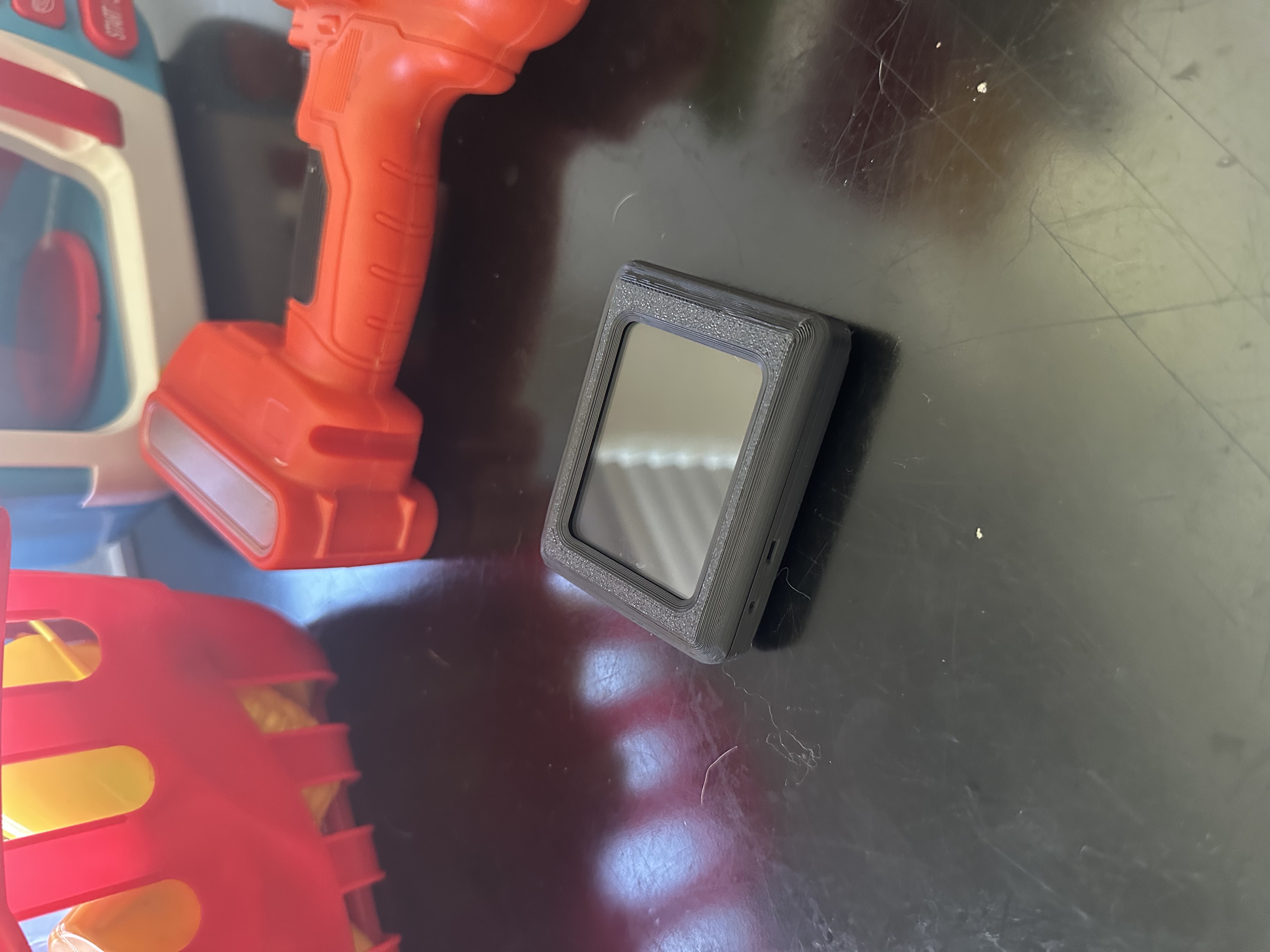
Fast forward 20 years, and everyone has their cameras out or heads down. A quick check of the time, a notification, or even an idle 30 seconds, and the next thing you know you’re doom scrolling for 30 minutes. You can’t touch your phone in your car, you can’t bring your phone to school, you might even have to carry two or three phones for work. I built the solution.
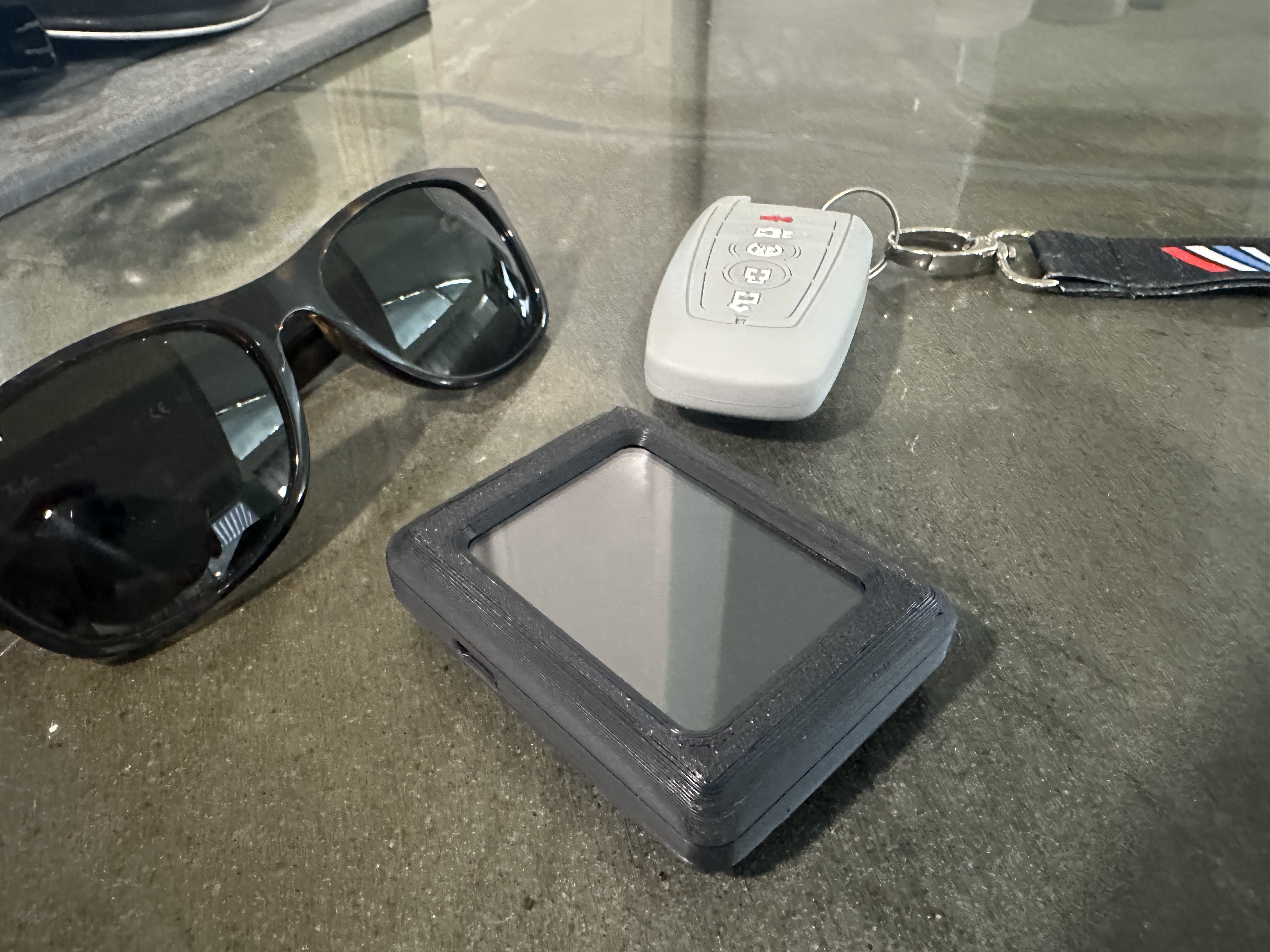
It seems so straightforward—a smaller device that leverages AI to keep you connected, but isn’t a phone. It handles most of your written communication platforms by summarizing, suggesting and prompting contextual responses.
At work, long form emails are handled in seconds and screen/context switching and recovery time is minimized. For parents and young adults, read and response time is reduced and distractions are eliminated. For kids, something parents can use to contact them that doesn’t have a camera or internet browser at all. For employees, provide a device that doesn’t require device management.
No personal information is held at the device level, and if it’s lost or stolen—or you just remove it from your account—the device wipes itself and resets. Device level keys make sure your messages aren’t intercepted along the way.
I have been sharing updates of my progress over the last few months, but am just getting started. I’m not here to disrupt anything—I built a thing for myself, am personally challenged by this whole process of getting something to market, think it’s cool and maybe someone else might think so too.
I invite you to check out the page and social media accounts, and if you like what you see, a free waitlist and a beta testing application exist, and I encourage you to sign up.
I am not really trying to replace the phone, but just give people an alternative to $1,000 phones, massive screens, tracking software, constant notifications and everything else we have come to dislike about the solution we once cherished.
And lastly, the irony of me posting to social media in order to get you to consider a product to avoid social media is not lost on me. I guess this is kind of like auditing myself out of a job.
Stay reachable.
Keep your attention.
Reachable without the rabbit hole
Why I built PAJR
There was a pattern in my life I couldn’t ignore.
If I ignored my phone, I risked missing something important. If I checked one alert, I often got pulled into a longer distraction spiral. One message became five notifications. One notification became app-hopping. One app switch became a feed. And the focus I was protecting was gone.
That loop kept repeating: be reachable, or stay focused, but rarely both. PAJR started as my attempt to break that false choice.
The problem that made PAJR necessary
Most of us are carrying communication load across too many channels—email, Slack, texts, and app notifications that all claim urgency. Even when each interruption seems small on its own, the total effect is constant context switching and mental drag.
That drag shows up most in moments that actually matter:
- Work, where responsiveness counts
- Family coordination, where timing counts
- Caregiving, where a missed alert can have a real cost
I didn’t want to disconnect from people. I wanted to disconnect from noise.
What PAJR is designed to do every day
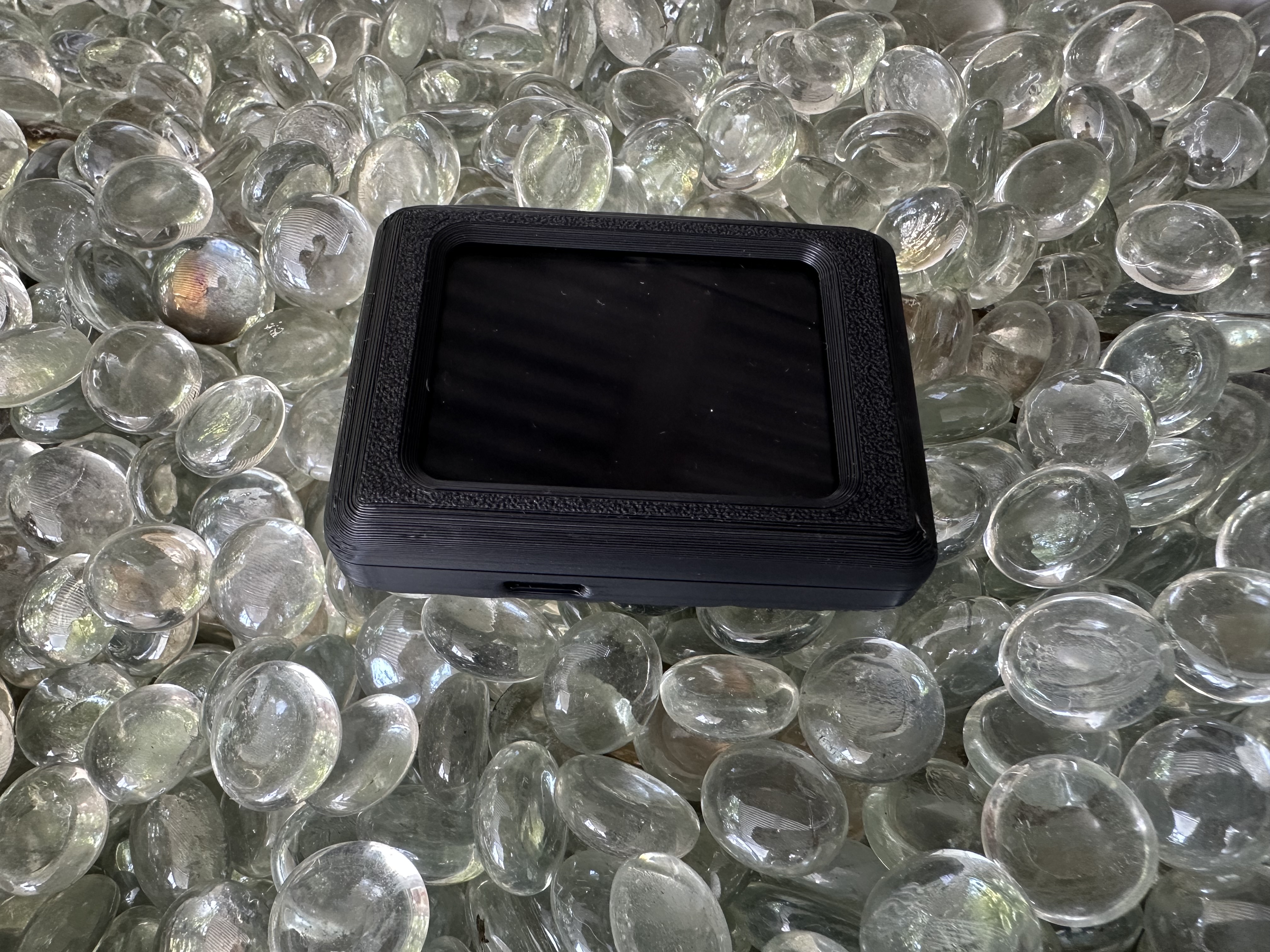
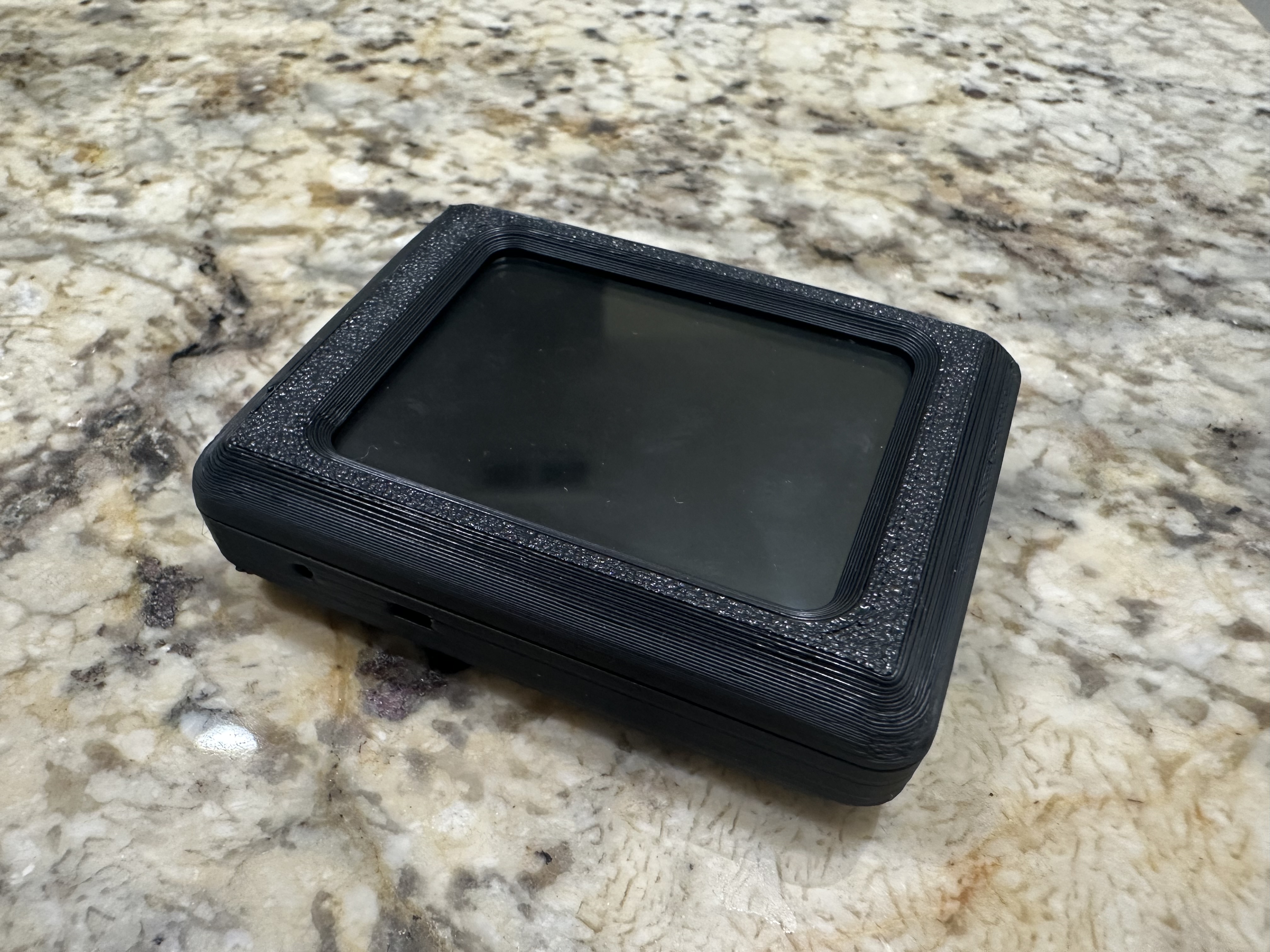
PAJR is designed to keep you reachable for what matters, without pulling you into phone-driven distraction. In practice, it routes the important messages from your existing channels into one focused stream, and leaves the feeds, app-hopping, and notification clutter out of it. The goal is fewer attention breaks, with the people and moments that actually matter still getting through.
Who PAJR is for (and not for)
PAJR is built for people carrying real communication load who need to be responsive without being available to everything. Primary users include founders and operators, on-call professionals, and parents and caregivers managing urgent coordination.
A strong secondary fit is seniors and families who value simple, reliable contact over app complexity. It’s not built for people looking for a full entertainment-smartphone replacement with social feeds and a broad app ecosystem—and it’s also not the right fit for people who want zero digital contact and no notifications at all.
The behavior change I’m trying to create
The long-term goal is helping people move from compulsive checking to intentional communication—checking on their terms, not the phone’s. If you trust that the critical alerts will still break through, you can ignore the rest with confidence. Over time, that should mean less doomscrolling, less context switching, and less of the low-grade stress that comes from constant partial attention. It should mean more real presence, at work and at home, without asking anyone to go off-grid to get it.
How PAJR fits real life without guilt
PAJR is a dedicated channel for priority communication, not a surveillance tool. It’s built to surface what actually matters, not generate a new flood of prompts or a guilt loop. Optional AI and configurable integrations let each person tune it to their own workflow and tolerance, and the hardware-first design with multi-day battery life makes it easy to carry and just as easy to ignore when it’s quiet. The experience should feel like a calm utility—not a moral coach.
What makes PAJR different
PAJR isn’t a screen-time scolder, and it isn’t a productivity gamification app. It’s a communication layer: a dedicated physical device paired with routing logic across tools like email and Slack. The core promise is simple and concrete—stay reachable without the feed—which is narrower and more practical than a generic wellness goal. Think of it as a blend of focused communication device, alert router, and optional AI assistant.
The design trade-offs behind the product
- Usability favored a focused, low-complexity interface over smartphone-level feature breadth.
- Accuracy improved with AI-assisted summarization and filtering, at the cost of some compute and latency.
- Battery life pushed the design toward purposeful, occasional interaction rather than an always-on app experience.
I’d rather have something that does less, does it reliably, and lasts days on a charge than a device that tries to do everything and needs charging by mid-afternoon.
The pricing question
The device comes with a year of core service included, and from there it moves into a simple tiered plan. I’m not publishing the exact numbers yet, but the shape is set.
The tension behind it is real: keep the offering simple and generous, while the AI and transcription work behind the scenes has real costs that a model needs to account for.
What I do know is the principle guiding it: whatever the final numbers are, the model can’t depend on grabbing more of your attention to make money. That’s the one line I’m not willing to cross, regardless of how the specifics land.
What success looks like, honestly
We’re pre-launch, so these are goals I’m building toward, not numbers I’ve already measured. In the first 30 days, I’d call it working if someone has connected their core channels and genuinely relies on PAJR for the alerts that matter—fewer missed messages, fewer reflexive phone checks. A year in, I’d want PAJR to feel like a stable part of how someone operates, not a novelty they’re still deciding about—calmer and more dependable in both work and family communication. That’s the bar I’m holding this to as real users come on board.
Data collection and privacy principles
PAJR collects the basics needed to run the service—account information, device identifiers, and encrypted integration tokens for the tools you connect. Messages aren’t kept as a long-term archive: they exist in short-lived storage just long enough to summarize, route, or deliver, then they’re deleted on a schedule. The guiding principles are data minimization, encryption, and user control. The posture is explicit: no ad tracking, no selling personal data, and no training AI models on your content. Data is used to make the device work—nothing more.
How I validate real impact
The point isn’t to generate more notifications. The point is to improve outcomes. That starts with real conversations during the beta—understanding what people actually need—followed by regular check-ins and bug tracking to see how it’s working in practice. On the technical side, I watch delivery latency, message reliability, and whether anything is getting dropped or delayed. The core question is always the same: is distraction going down while responsiveness holds steady? If notification volume rises without that improving, the filtering isn’t good enough yet, and I tighten it.
A common misunderstanding
The most frequent one is expecting PAJR to mirror a full smartphone—same apps, same instant everything, all in a smaller box. That’s not the goal. PAJR is optimized for critical communication, not for replicating entertainment feeds, broad app ecosystems, or the high-noise experience it exists to get away from.
Where PAJR is going
In five years, I see PAJR as more of a platform than a single gadget, with the hardware still at the center—that physical device is a big part of why people trust it. I could see it branching into modes built for work, family, and caregiving, each a little different but built on the same idea. Any AI capability that gets added should stay optional and user-controlled, not something that quietly expands on its own.
If you remember one thing
PAJR exists so people can stay reachable without handing their attention over to the smartphone attention economy. It’s signal over noise, not punishment. The goal is to protect focus and presence while keeping fast access open for the communication that actually matters. If that holds true in daily life, PAJR is doing its job.
03 · Founder Q&A
The questions behind the product.
Open any question to read the founder’s answer.
01What problem did you personally experience that led you to create PAJR?
I’d either ignore my phone and risk missing something real, or I’d check it and get pulled into a scroll I didn’t plan on. Managing email, Slack, texts, and app notifications meant constant switching—one glance at my phone during a walk with my kid could turn into ten minutes of scrolling before I noticed. PAJR came out of that tension: I wanted to stay reachable for what mattered without carrying the whole attention trap around with me all day.
02In one sentence, what is PAJR designed to do for the user every day?
Keep you reachable for what matters, without the rest of the phone along for the ride—it pulls the important stuff out of your email, Slack, and texts into one focused stream, so you’re not opening five apps or falling into a feed just to check whether something urgent came in.
03Who is the primary user you built this for, and who is not the target audience?
I built it for myself first, but the people I hear from most are founders and operators who can’t go dark, on-call folks, and parents like me juggling kid logistics mid-workday. It’s also a good fit for people who just want something simple and reliable to stay in touch—including some older users who don’t want or need a smartphone’s complexity. It’s not for people who want a phone replacement with a camera, browser, and social apps—that’s the opposite of what this is. And it’s not really for people who want to disappear entirely and get zero notifications either.
04What behavior change are you hoping PAJR can create over the long term?
I want people to move from checking compulsively to checking on their own terms. If you trust that the urgent stuff will actually reach you, you can let the rest go without the low-grade anxiety of “what if I’m missing something.” Less doomscrolling, less app-hopping, more actual presence—at your desk, at the playground, wherever you are. The goal was never to get people off-grid, just off the hook.
05How does PAJR fit into someone’s routine without feeling intrusive or judgmental?
It’s not watching you or scoring you—there’s no dashboard telling you how much you failed today. It’s a channel for the stuff that actually needs your attention, nothing more. You can tune how much AI help you want and which accounts feed into it. And because the battery lasts days and it’s not trying to be your whole digital life, it’s easy to just leave it alone when it’s quiet. That’s kind of the point.
06What does PAJR do differently from other wellness, screen-time, or habit devices?
I’m not trying to shame anyone into putting their phone down—there are enough apps already doing that with charts and streaks and guilt trips. PAJR is a communication tool first: a physical device plus routing logic across email, Slack, and texts. The promise is narrower, and I think more useful—stay reachable without the feed. No ads, no tracking, nothing for sale. Small device, real routing, honest privacy: that’s the whole idea.
07What were the biggest design trade-offs between usability, accuracy, and battery life?
Usability meant keeping the interface simple instead of chasing smartphone-level customization—every extra option is one more thing standing between the device and the point of having it. Accuracy meant leaning on AI to summarize and filter, which comes with real compute and latency costs I had to accept. Battery life meant designing around occasional, purposeful use instead of an always-on app experience. I’d rather have something that does less, does it reliably, and lasts days on a charge than something that tries to do everything and dies by 3pm.
08Which product decision was most controversial internally?
Pricing, honestly. The shape is set—a year of core service comes included with the device, then it moves into a simple tiered plan—but the exact numbers aren’t public yet, so I’d rather not lock myself into details here before they’re final. The tension is real: keep it simple and generous for users, but the AI and transcription work behind the scenes isn’t free, so the model has to hold up. Whatever the final numbers end up being, they have to avoid the thing I’m building against—a business that needs your attention to make money.
09How do you define success for a PAJR user after 30 days and after one year?
We’re pre-launch, so I don’t have real numbers to point to—this is more about what I’m building toward than what I’ve measured. In the first month, I’d call it working if someone’s connected their main accounts and actually trusts PAJR to catch what’s urgent, instead of double-checking their phone anyway. A year in, I’d want it to just be part of how someone operates—not a gadget they’re still deciding about, but something that leaves them calmer and more reachable at the same time. That’s the bar I’m holding myself to as real users come on board.
10What data does PAJR collect, and what principles guide your privacy decisions?
PAJR needs some basics to work—account info, the device itself, and encrypted tokens to connect to things like your email or Slack. Messages aren’t kept as a long-term archive: they exist in short-lived storage just long enough to do their job—summarizing, routing, delivering—and then they’re deleted on a schedule. No ad tracking, no selling personal data, no training AI models on what you send. If it’s not needed to make the device work, I don’t want it sitting around longer than it has to.
11How do you validate that PAJR is genuinely helping users?
That’s the risk I worry about most—building something that just becomes a new source of noise. Right now that means real conversations with beta users about what they actually need, regular check-ins, tracking bugs, and watching the technical side—how fast messages get through, whether anything’s getting dropped or delayed. But the real test is simple: are people checking their phone less while still not missing what matters? If alerts go up and that doesn’t improve, the filtering isn’t good enough yet, and I fix it.
12What have early users misunderstood about PAJR?
The biggest one is expecting this to basically be a smartphone in a different shape—same apps, same instant everything. It’s not trying to be that. There’s also some confusion about what’s built and working today versus what’s still being refined in beta. And on pricing, the exact numbers aren’t public yet, so I get why that’s unclear right now—I’d rather be upfront about that than promise something I might have to walk back.
13How do pricing and business model choices support the mission?
The shape of it is set even if the exact numbers aren’t public yet: a year of service comes included with the device, then it moves into a straightforward tiered plan instead of anything usage-shaming or ad-supported. The principle guiding it is simple: however the final numbers land, it can’t depend on grabbing more of your attention to make money. That rules out ads, engagement tricks, selling data—the stuff phones lean on. Whatever the plan ends up being, it has to hold up on its own without needing you glued to the device.
14Where do you see PAJR in five years?
Probably more of a platform than a single gadget, but the hardware stays central—that physical device is a big part of why people trust it in the first place. I could see it branching into different modes for work, family, and caregiving, each tuned a bit differently but built on the same idea. Any AI that gets added should stay optional and something you control, not something that quietly creeps further into the device without you asking for it.
15If readers remember one thing about PAJR’s purpose, what should it be?
I built this to stay reachable without handing my attention over to my phone. It’s not a punishment device, and it’s not trying to replace phones for everyone. It’s an alternative for people who are tired of that trade-off—signal without the noise. If it does that, it’s doing its job.